Separate three different jobs.
RFID identifies merchandise. Identity verification checks the shopper. Payment requires approval and a successful transaction. The flow makes these steps legible.
02 / A simpler checkout
A retail concept that brings item recognition, identity, and payment into one readable flow.
The product question
Scanning items one at a time makes the counter the bottleneck. The challenge was to explain a different checkout without making the shopper learn how RFID or identity verification works.
A deliberately short sequence: place the basket, review the total, verify identity, and approve payment. The retail story evolved into a Macy’s setting, with a companion exploration of a camera that adapts to the shopper.
Explore the experience
Select a moment, or play the guided sequence.
 Concept visualization
Step 01
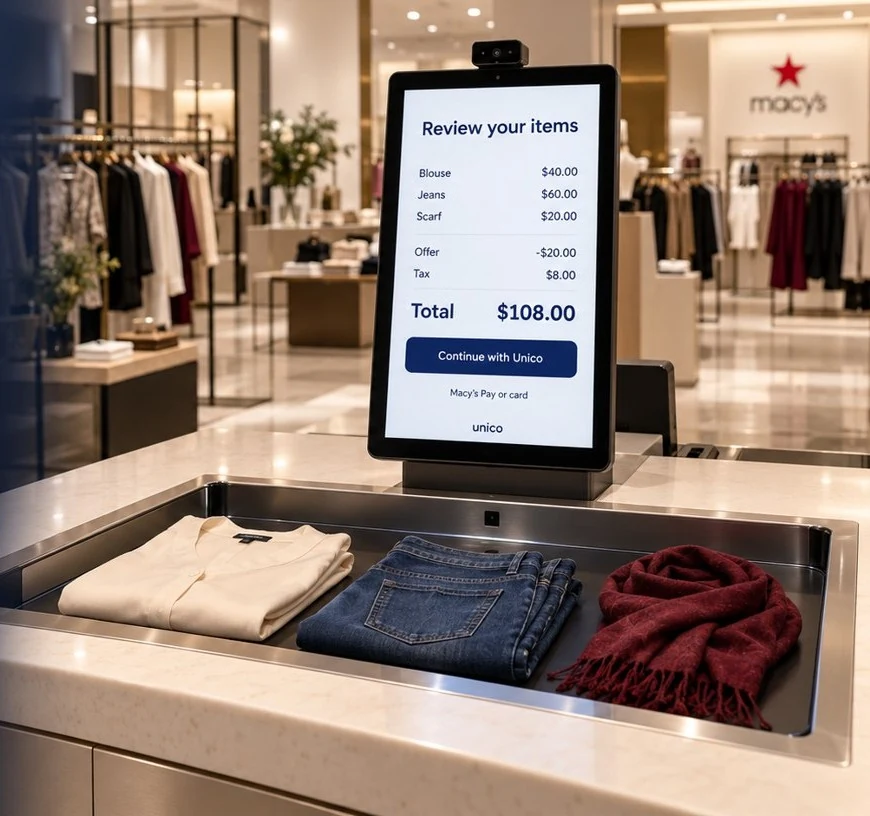
RFID reads the tagged merchandise together. The shopper sees the detected items, pricing, and total before continuing. The screen has one job: make the basket easy to check.
 Concept visualization
Step 02
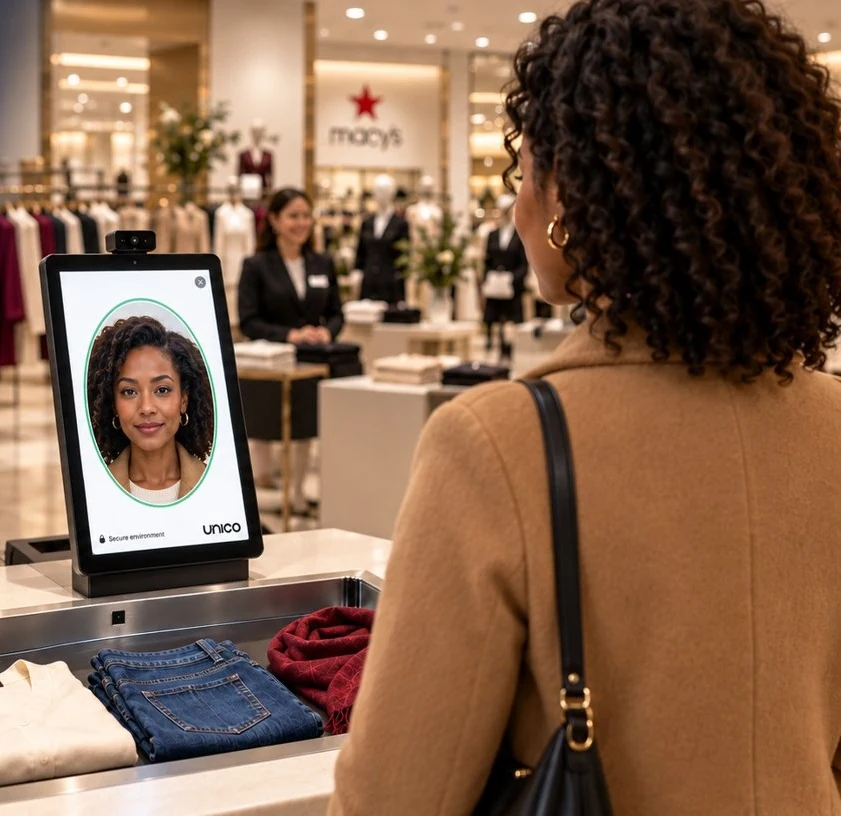
The shopper chooses to continue with Unico. Identity verification supports the purchase flow, while the total and the payment decision remain explicit.
 Concept visualization
Step 03
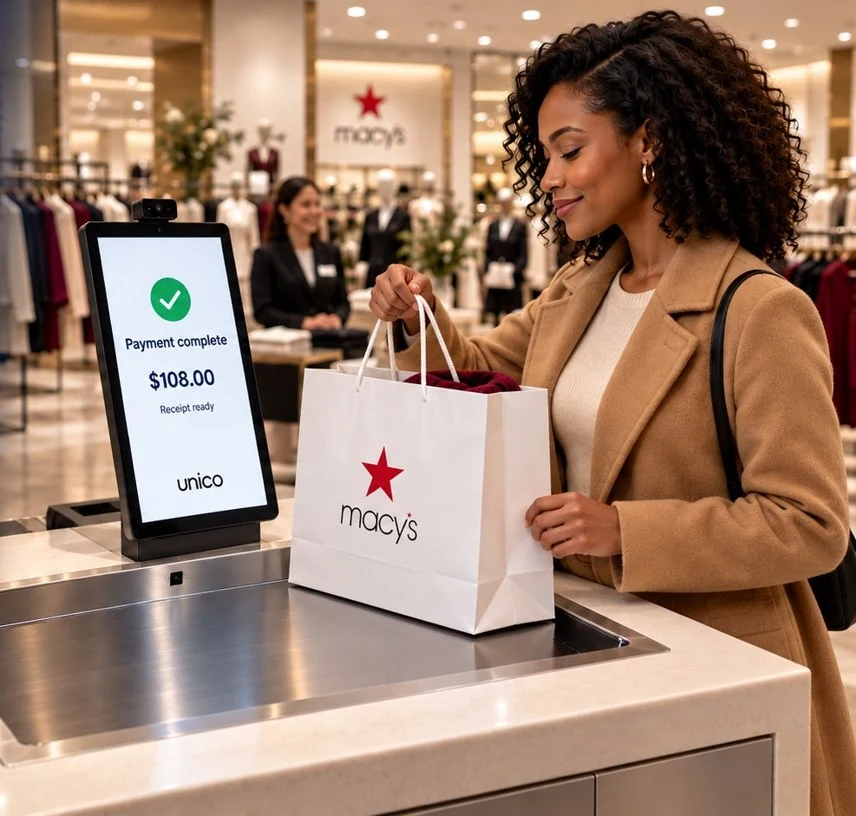
After the approved payment succeeds, the terminal confirms completion. The shopper and associate need the same unambiguous answer: this purchase is done.
Product decisions
RFID identifies merchandise. Identity verification checks the shopper. Payment requires approval and a successful transaction. The flow makes these steps legible.
The original retail pitch reduced the experience to a few frames. Each state answers one question: what is in the basket, what happens next, or whether it worked.
The tray, camera, screen, and associate are one experience. Hardware placement matters as much as the words on the display.
A physical product question
Checkout should work for different people, heights, and positions. A companion hardware exploration puts a moving camera behind a mirror, so the capture position can adapt to the shopper.
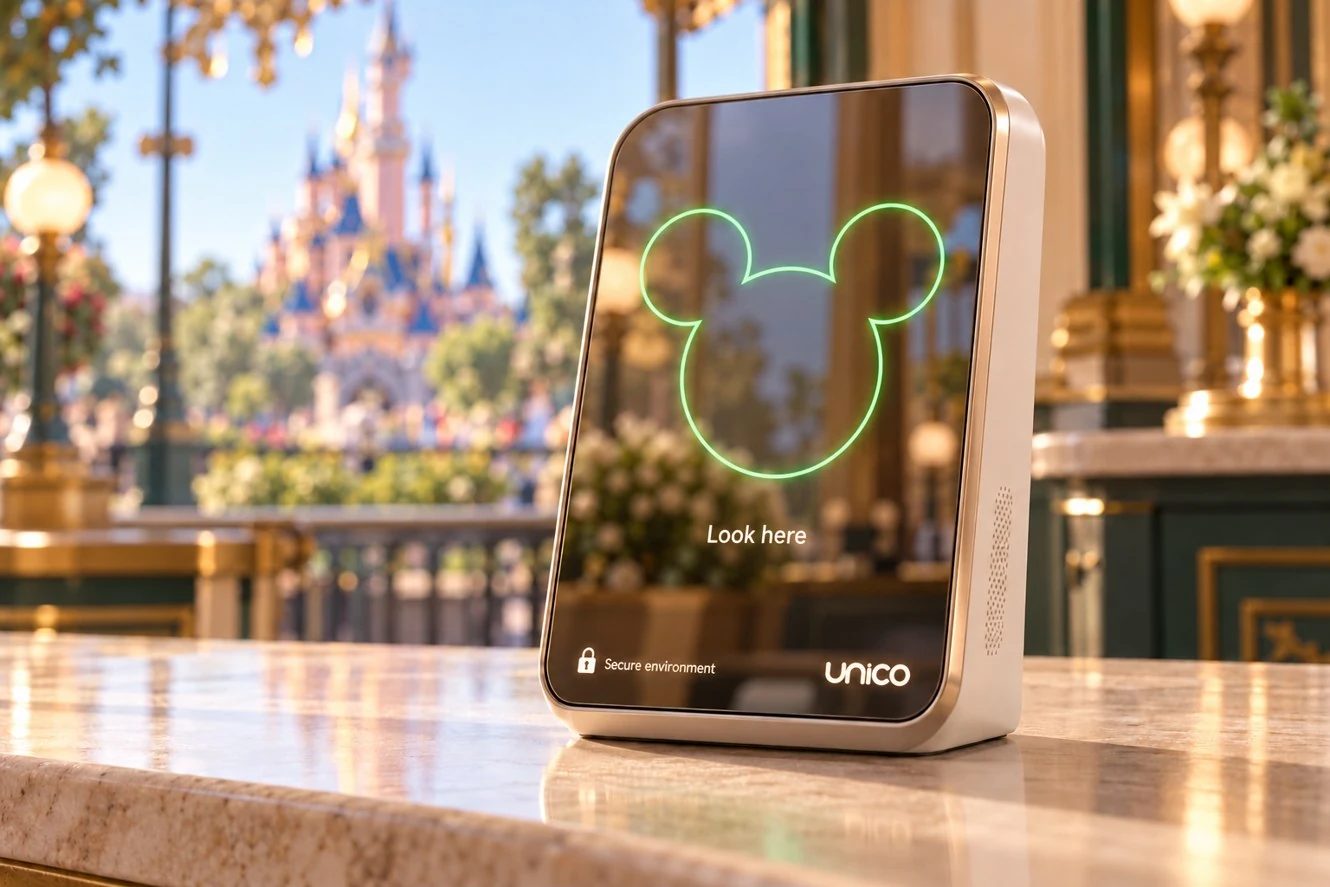
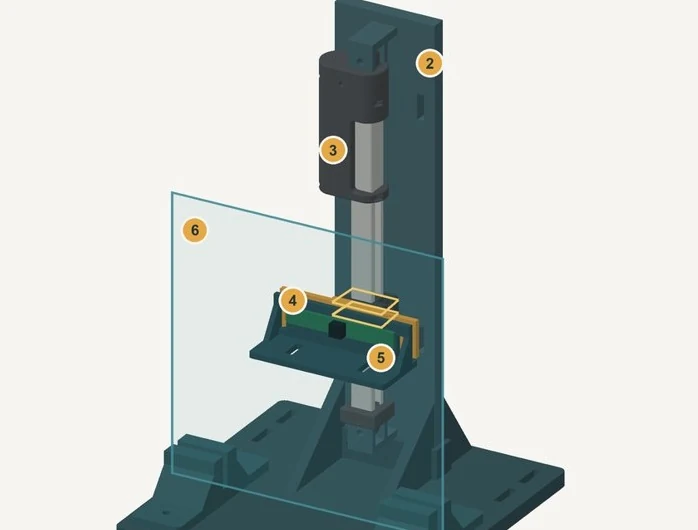
Hardware exploration, not a validated capture system. The next step is to test reach, movement, and the first usable frame across seated and standing positions.
What I would validate next
Validate the basic transaction before expanding the experience to more locations or shopper segments.
Compare the detected items with the actual basket, including missed and duplicate reads.
Measure the entire checkout, including corrections and any staff assistance.
Check whether shoppers understand the total, the identity step, and the payment approval.
Proposed validation plan · No measured pilot results are presented.
Proposed retail experience. Visualizations and sample purchase data illustrate the flow; no commercial deployment or measured results are claimed.
From the gate to the next inning, with fewer stops.