Human Token / Unico
A person.
Their token.
A concept film that begins with a person, makes their token visible, and returns to the same person on another day.
My contribution
Keep the person at the center.
I chose “a person creates their token,” rather than “becomes a token.” I directed the story toward a person, their token, and a later return, and away from showing unfinished phone UI.
Story direction and design decisions. This concept film illustrates an idea, not biometric performance.
The product question
How do you make an invisible idea feel familiar?
The central framing was deliberate: a person creates their token. Not a thing being assigned an identifier. The film needed to make that distinction clear before asking anyone to understand the architecture.
A consequential design choice
Show the person.
Not an unfinished interface.
I moved away from showing the phone screen for two reasons: the interface was still unfinished, and API-only tokenization does not require a liveness capture. A literal selfie flow could imply that the optional liveness experience was mandatory.
Keep the opening conceptual. Put the mechanics in “How it works.”
Product storytelling / scope clarityInside the film
Four frames. One idea.
Actual frames from the concept film, shown without added motion.
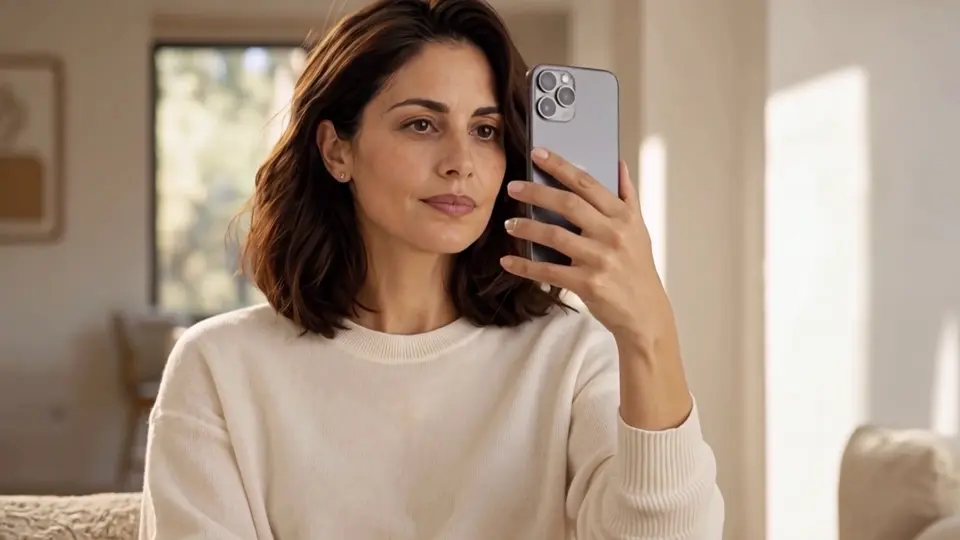


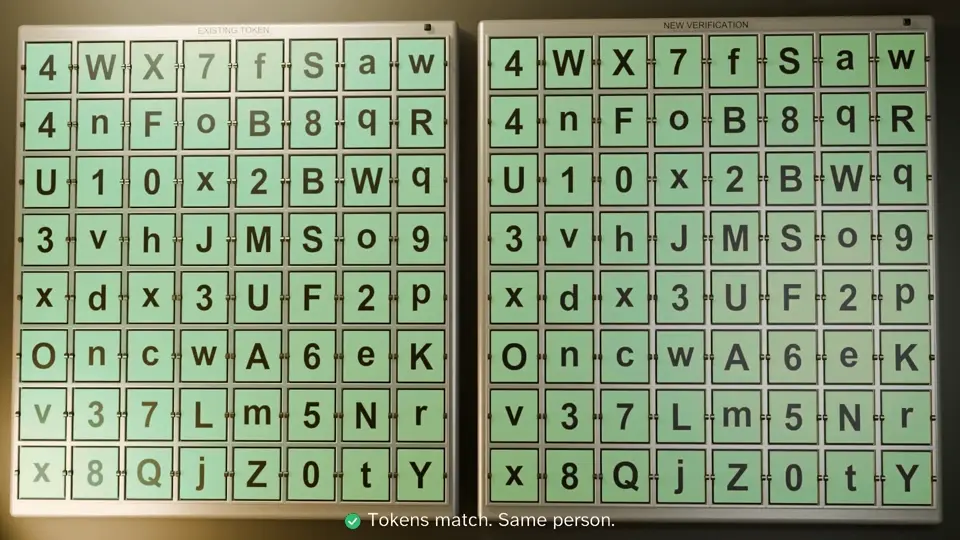
The tiles are a visual metaphor, not stored biometric data. This is an illustrative design film. The depicted interface and token animation do not establish production behavior, security guarantees, biometric accuracy, or performance.
Making the standard shared.
Interaction standards and the review systems behind the work.